Nature has created complex biological systems that are truly intelligent and functional (e.g., animals, insects, and micro-organisms). A cell, for example, is so advanced that it is known as a "living system" even though it has a characteristic length of only around a few micrometers. An artistic impression of the highly advanced functions of a cell working ensemble is shown below. Through the complex combination of advanced functions of a cell, this biological system is sometimes regarded as having a form of primitive "intelligence".
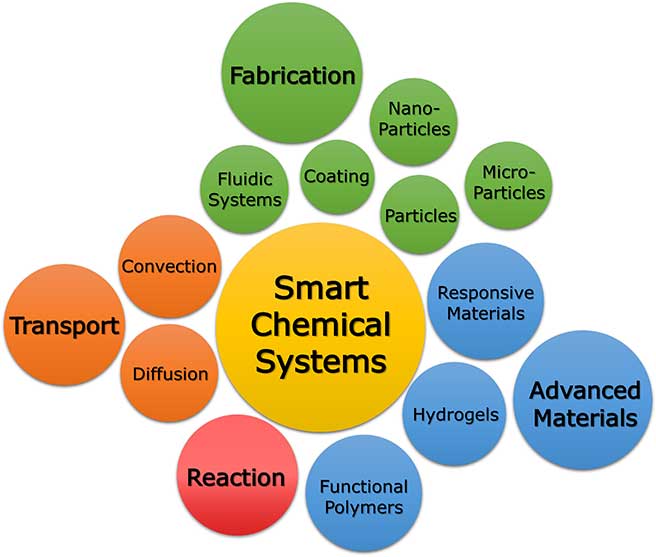
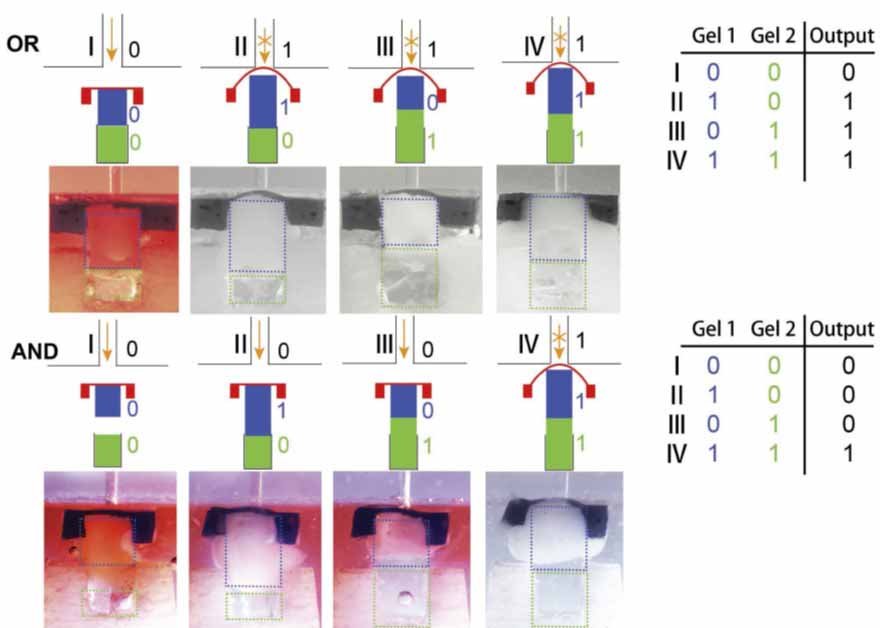
In our laboratory, we are taking small steps toward creating chemical systems that are "intelligent". Some of the toolboxes available to us are shown in the diagram below. We couple advanced materials with the design of the system, the transport of molecules, the use of interesting reactions that drive the dynamics of the systems, and the fabrication of the systems. These systems can potentially have applications in different technological areas such as drug delivery, membranes, actuators in microfluidics, and soft robotics. A few examples of our work are described as follows. Example 1. Performing Logic Operations using Stimuli-Responsive Hydrogels We demonstrated that by using multiple types of stimuli-responsive hydrogels, it is possible to combine them into an "integrated circuit" for performing complex logical operations. Here, we showed the fundamental approach by combining the different components for realizing the functions of different types of logic gates, such as AND, OR, NAND, and NOR. Importantly, these logic gates can be integrated by simply connecting the output of one logic gate directly to the input of another logic gate. Hence, it is possible to use this fundamental approach for fabricating massive numbers of logic gates in a particle for performing complex analysis (Advanced Materials, 2017, 29, 1606483).
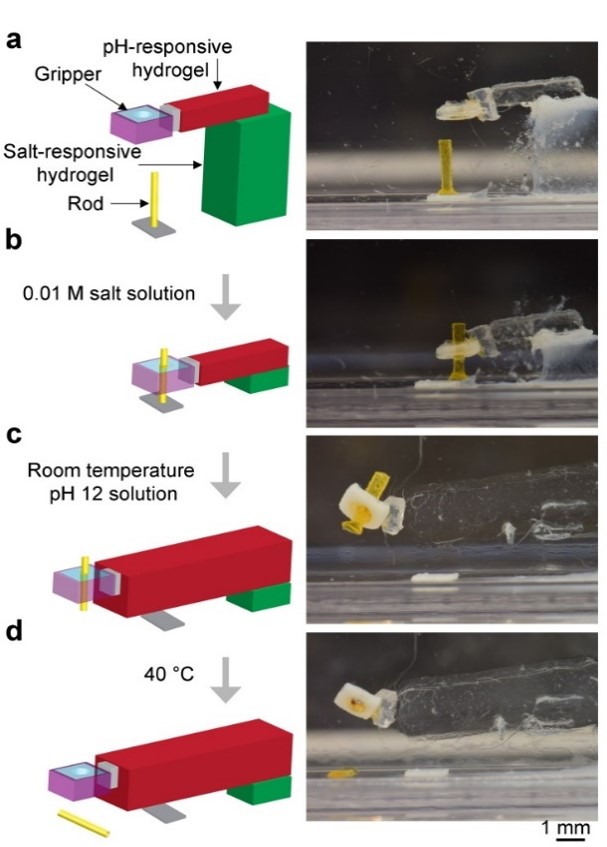
Example 2. Fabricating a Novel Class of Soft Grippers and Machines The expansion and contraction of stimuli-responsive hydrogels can be used for different types of practical functions. We demonstrated that they can be used as soft grippers with very high load-to-weight ratio. Combining these soft grippers with actuators made of other types of stimuli-responsive hydrogels, a general class of soft machines can be fabricated (Materials Horizons 2018, 6, 160).
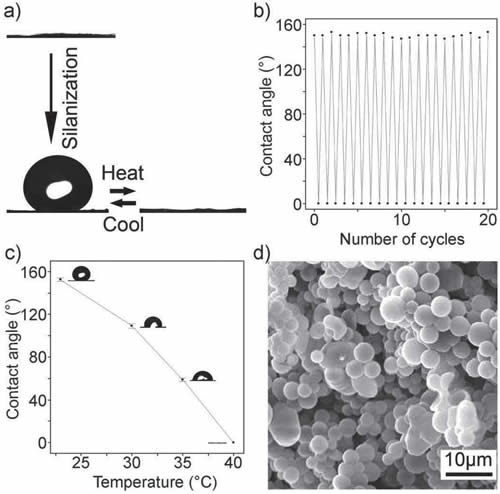
Example 3. Responsive Membrane: Superhydrophilic to Superhydrophobic In one example, we made a responsive membrane with a surface that can change continuously from superhydrophilic to superhydrophobic based on a specific stimulus (Advanced Materials, 2015, 27, 4062).
We made this membrane using stimuli-responsive hydrogels. Stimuli-responsive hydrogels can be fabricated to respond to a wide range of stimulus, such as pH, temperature, ions, and other types of chemicals and biomolecules; hence, the method is general. The figure above shows a temperature-responsive hydrogel covered with a layer of superhydrophobic particles. When heated, the membrane is superhydrophilic; when cooled, it is superhydrophobic. This membrane can allow molecules to diffusion through it, or not, depending on its wetability as shown in the figure below.
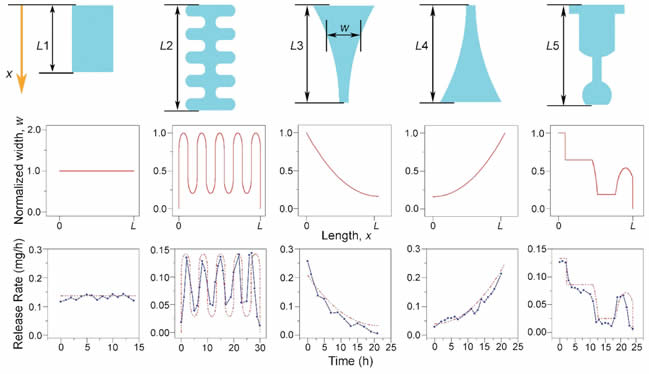
Example 4. Programmable System: Fully Customizable Drug Tablets In another example, we made a programmable drug delivery system (or a drug tablet) that can deliver molecules with any type of customizable release profile with time (Advanced Materials, 2015, 27, 7847).
The shapes of these systems are printed with a commercially-available (and inexpensive) 3D printer; hence, they can be fabricated easily.
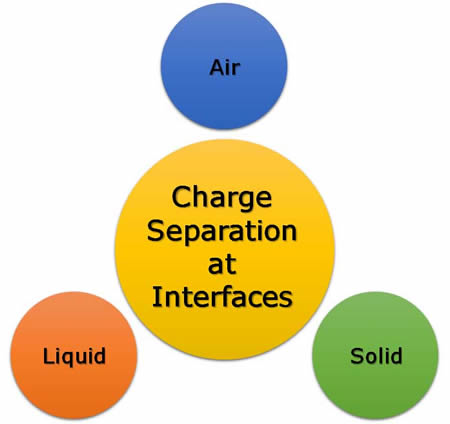
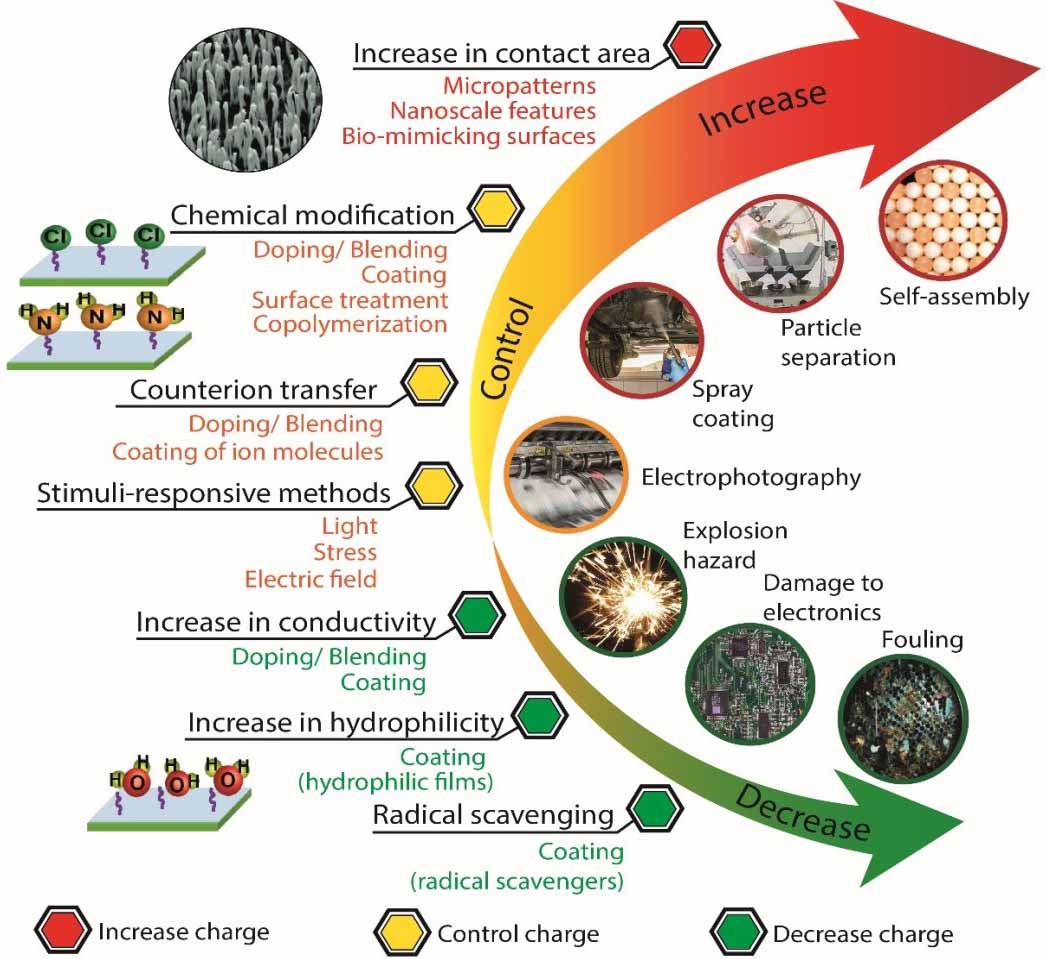
We are also interested in the fascinating field of charge separation at the interfaces of air, liquid, and solid. There is a constant need to control the amount of charge separated at the interfaces, e.g., for solid-solid contacts (or contact electrification). An increase in charge can be useful for many applications, such as the harvesting of power or for bio- and chemical sensors. A decrease in charge can prevent undesirable or hazardous circumstances from happening (e.g., explosions due to electrostatic discharge) (Advanced Materials 2018, 30, 1802405).
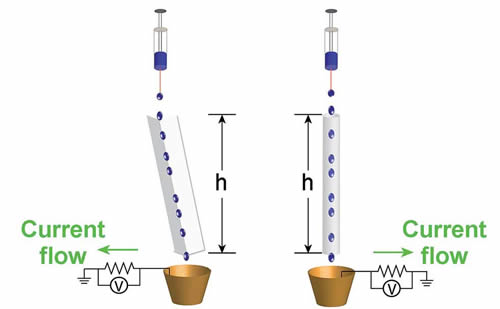
Example 1. Generating Power by Electrification at the Solid-Liquid Interface We found in one study that by simply flowing water across a solid surface, the water became charged. In this case, we are able to generate electricity using the phenomenon of electrification at the solid-liquid interface (Chemical Science, 2015, 6, 3347).
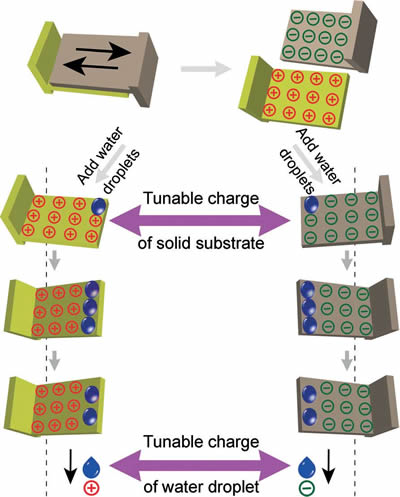
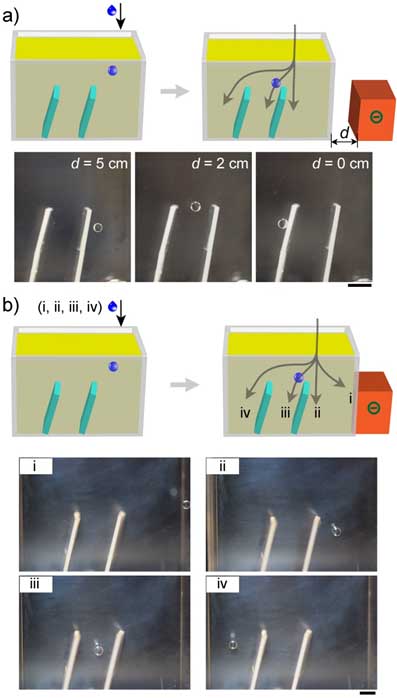
Example 2. Generated Charged Droplets by Solid-to-Liquid Charge Transfer Besides generating power, we can also generate charged droplets with high electric potential (Angewandte Chemie, 2016, 55, 9956).
There are two steps in this process. First, we charged two solid surfaces by contact electrification. Then, we flowed water droplets across the charged surfaces. The water droplets thus became charged. These droplets can have applications in microfluidics for the manipulation of droplets.
|
 For constructing synthetic chemical systems that are highly functional, we draw inspiration from the cell: we construct different functions separately and then combine them together in an integrated system. The different types of functions may include analytical functions (e.g., logic operations and memory), regulatory functions (e.g., self-organization and assembly), and practical functions (e.g., motion, actuation, and communication) as shown below.